Energy-System Efficiency Optimization
Public-safe evidence only: no acceptance pages with signatures, contract numbers, or handwritten records are displayed.
Operational Context
This deployment targets large-scale energy-conversion units under rapid load variation and changing operating conditions. The core requirement is to improve efficiency while respecting process boundaries.
- Typical deployment context: 330 MW / 660 MW unit environments.
- Primary objective: improve operating efficiency while maintaining stable operation.
- Constraints: process limits, equipment boundaries, and actuator operating ranges.
Method Architecture
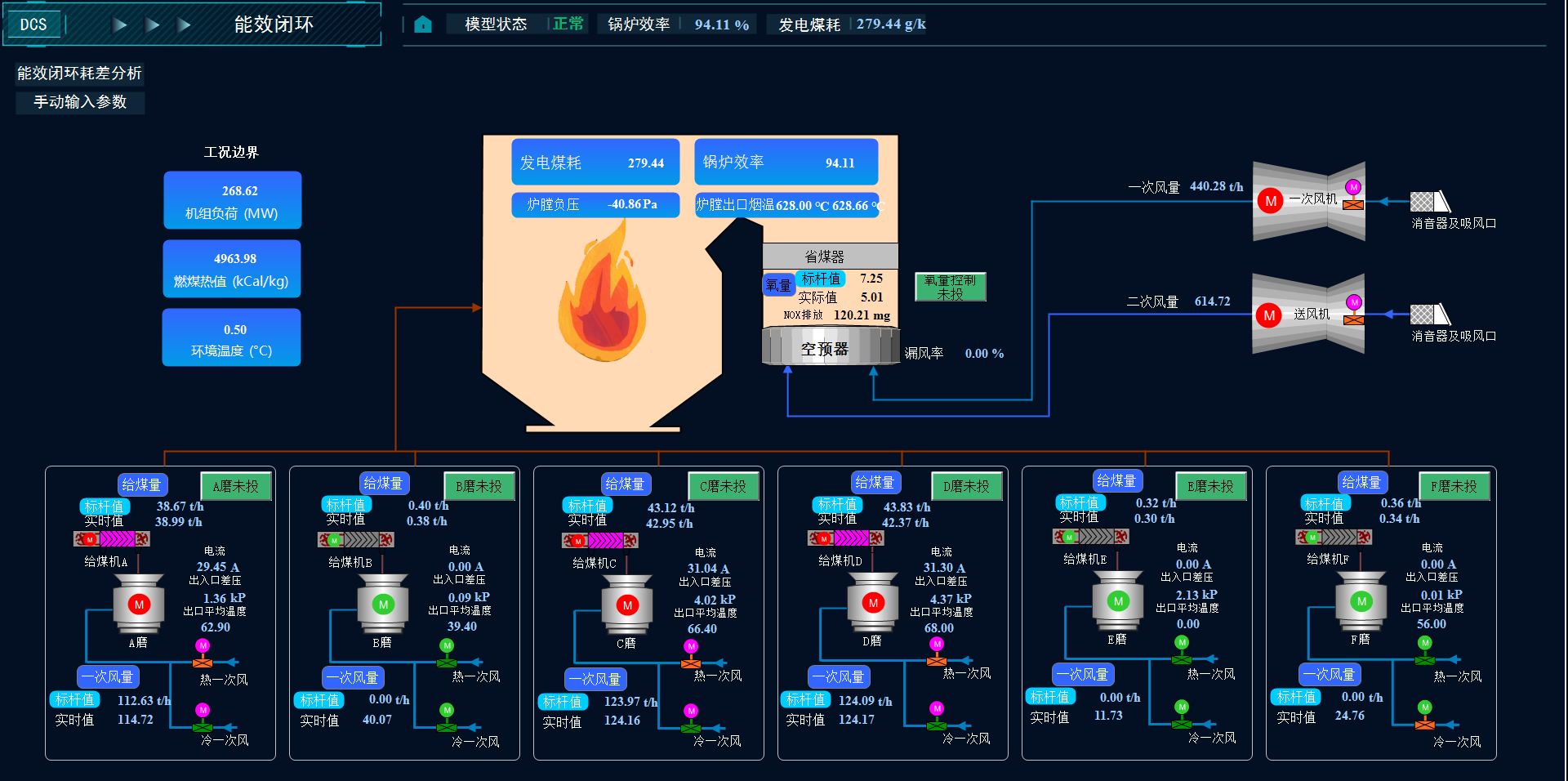
End-to-end efficiency-loop view integrating process state, key constraints, and actuator-side adjustments.
中文图注:能效闭环总览界面,联动工况输入、锅炉状态与执行机构参数。
- Robust constrained optimization for setpoint recommendation.
- Condition-adaptive feasible-set tightening for robust operation under uncertainty.
- Data-assisted recommendation modules to reduce online latency.
- Staged release workflow with replay validation.
Interface Evidence
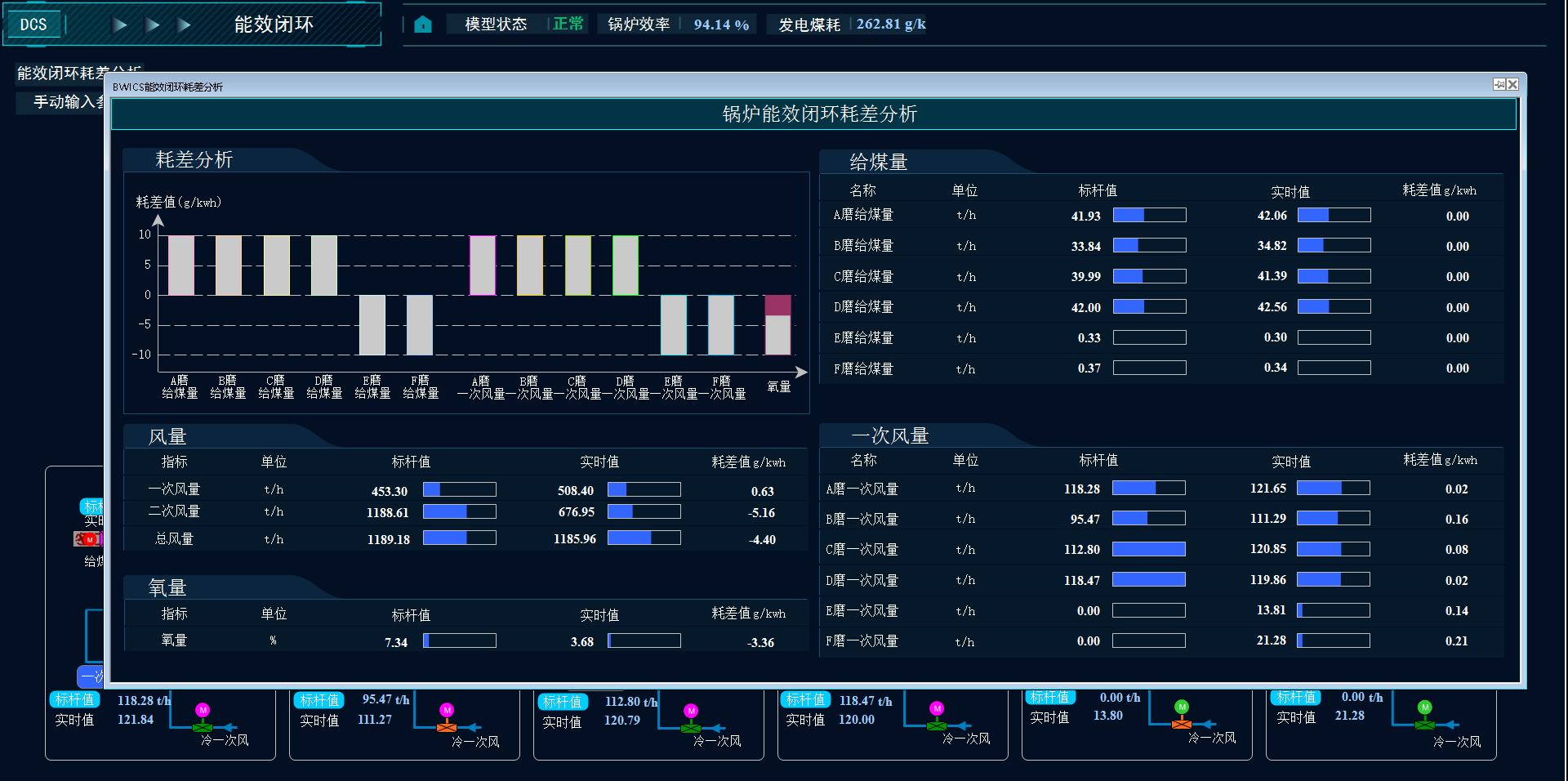
Real-time coal-consumption gap analysis for identifying controllable contributors.
中文图注:锅炉能效闭环煤耗差分析界面,用于实时定位关键偏差项。
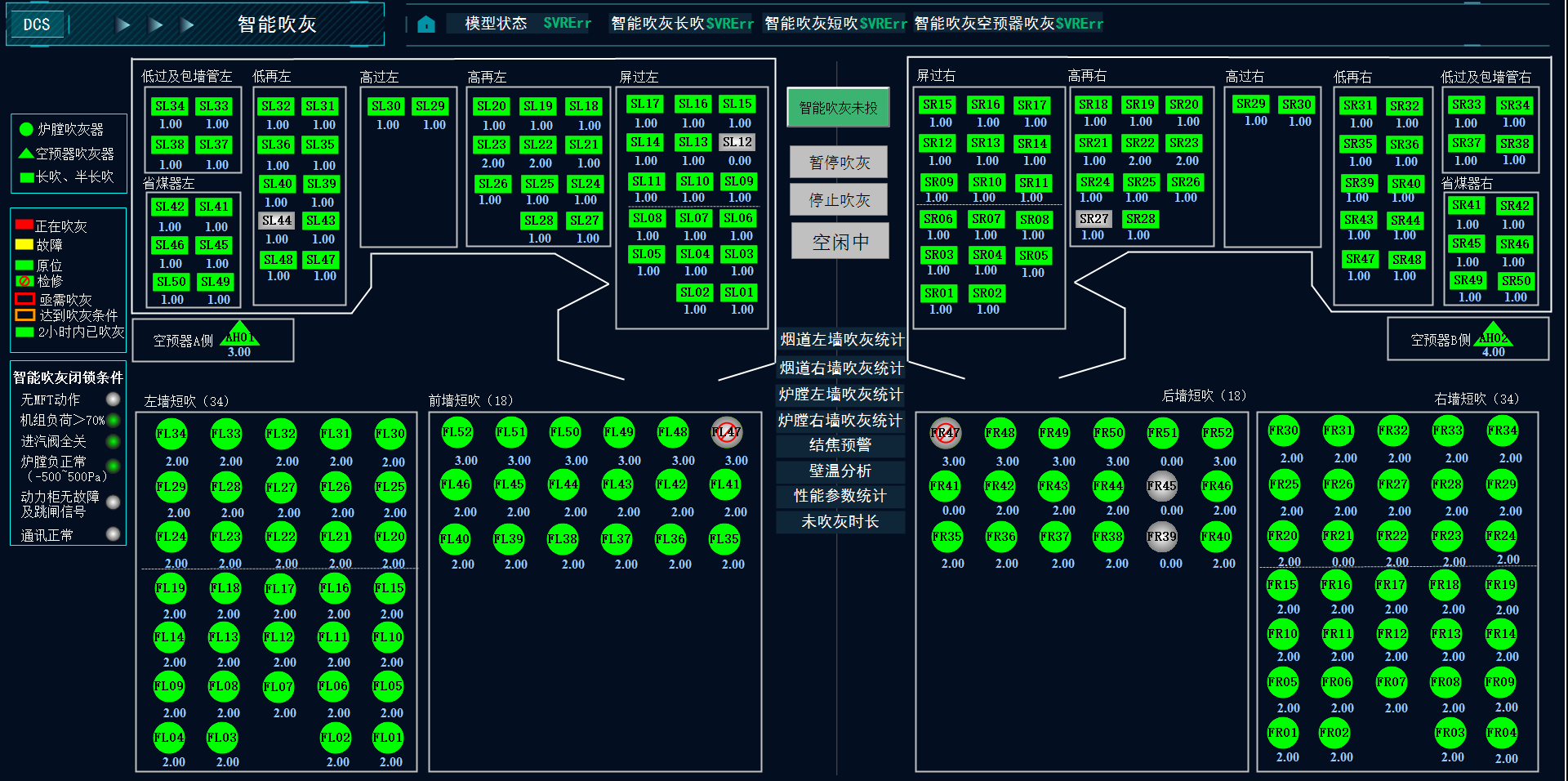
Operating-strategy panel with nozzle-level state and scheduling logic.
中文图注:智能吹灰投切策略界面,展示吹灰器状态与策略执行。
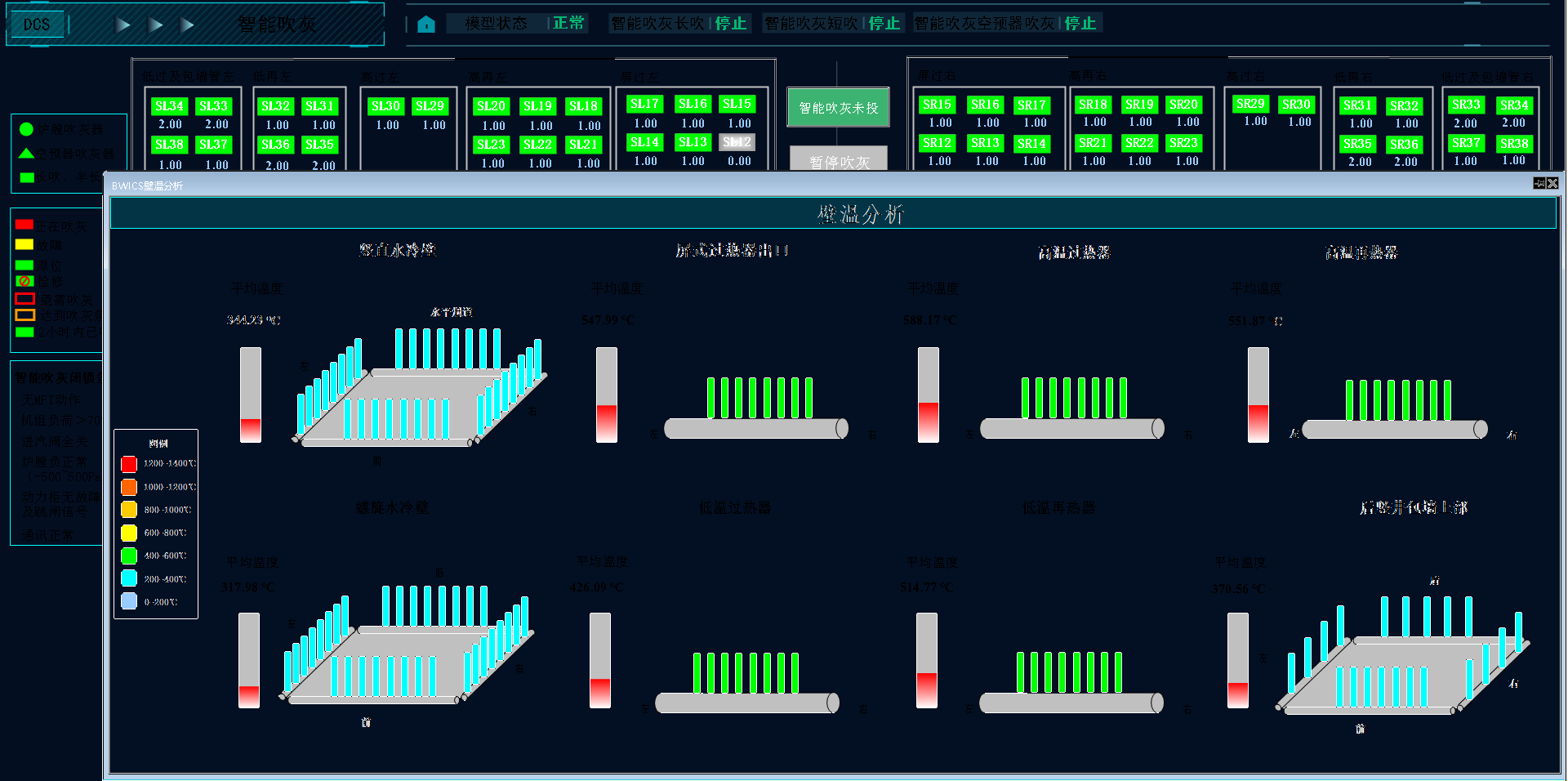
Wall-temperature analysis dashboard used for thermal-state monitoring during operation.
中文图注:壁温分析界面,用于受热面状态监测与吹灰策略辅助决策。
Measured Impact

Before-vs-after result table across representative load scenarios.
中文图注:多负荷工况下的投运前后结果对比表(示例)。
| Scenario | Representative load | Reported coal-consumption change | Unit |
|---|---|---|---|
| Continuous-operation example | ~50% load (~330 MW) | -1.2 | g/kWh |
| Additional low-load cases | 20% / 40% load | -3 to -6 | g/kWh |
- Measurable reduction in fuel-specific consumption under constrained operation.
- Better diagnosis support for operators through gap-analysis and trend interfaces.
- Stable deployment behavior under multi-condition operation.
Deployment Notes
- Cross-site template reuse supported faster rollout in similar units.
- Strategy release followed staged validation and review safeguards.
- Reported values are scenario-based; exact gains vary by unit condition and dispatch profile.